Cardiac arrest is blunt and unrelenting. You have minutes to act and only one job: move blood and oxygen until a heart can be reactivated. Over twenty years of first aid training and on-the-ground feedback have instructed me that self-confidence comes from existing knowledge, normal technique, and a clear head. Methods transform as the evidence evolves, and the best CPR today looks different than it did also 5 years ago. This overview gathers what experienced fitness instructors at First Aid Pro pierce into every class, from the most recent updates to the judgment calls you make when intricacy shows up.
Why updates matter more than ever
CPR works due to the fact that it purchases time. That time stretches when compressions are deep and quick, with marginal disruptions. It diminishes when rescuers hesitate or adhere to out-of-date behaviors. Scientific standards from bodies like ILCOR and national resuscitation councils rejuvenate every five years or quicker, and they move the details: compression prices, series, defibrillator motivates, opioid overdose steps, infant hand placement, or when to switch rescuers. A first aid and CPR course taken years ago offered you a structure, not an irreversible license to operate on autopilot. Routine CPR correspondence course transform muscular tissue memory into muscular tissue accuracy.
I have seen trained employees freeze because they fretted about damaging ribs, or they waited on a pocket mask that never showed up. I have actually likewise seen a grocery store guard beginning compressions in under ten seconds, require the AED, and hand off flawlessly when paramedics got here. The difference was method and present knowledge.
The present standard for top notch grown-up CPR
The foundation of CPR has not changed: press set, permit full breast recoil, keep disturbances under 10 seconds, and defibrillate as quickly as an AED gets here. The precision has sharpened.
Compression depth and rate. Aim for around 5 to 6 centimeters on a typical adult upper body, around 2 to 2.4 inches, and keep a price near 100 to 120 per min. "Stayin' Alive" still lands in the target rhythm, yet utilize any type of constant beat you can preserve without speeding up as exhaustion sets in. As well superficial means inadequate perfusion. Unfathomable threats injury without gain, unless the person is unusually big or the surface area is too soft.
Hand positioning. Heel of one hand in the center of the chest on the lower half of the breast bone, the other hand stacked, fingers up or interlaced so they do not push ribs. Shoulders over hands. Lock your elbow joints. Let your body weight do the job. If you are short, kneel close. If you are tall, adjust so you are not pressing at an angle. These details matter over five or ten minutes.
Full recoil. After every press, launch totally without jumping off the breast. Blood return relies upon that recoil. Several learners press great but ride the chest on the way up, which strangles flow. It feels slower to raise totally, but the blood circulation improves.
Minimal interruptions. Stopping compressions eliminates momentum, literally. Restriction pauses for breaths to five seconds when ventilating. When the AED claims "examining, do not touch," hands float and return to the minute the shock is delivered or advised against. Plan your activities on the downbeats: pass over loud, switch rescuers every 2 mins, and established the AED so pad positioning and analysis line up with those windows.
Compression-only CPR versus with breaths. For untrained spectators or when infection danger is high, compression-only CPR maintains enough flow to matter for the very first several mins of a witnessed adult heart attack. If you are trained and have a barrier gadget, add breaths at a 30 to 2 proportion. Rescue breaths matter a lot more for arrests driven by hypoxia, such as sinking, opioid overdose, or asphyxiation. In those situations, prioritise two preliminary breaths after developing unresponsiveness and calling for help, after that proceed with cycles.
AED usage. Early defibrillation increases or triples survival from shockable rhythms. As quickly as an AED arrives, transform it on, subject and dry out the chest if required, area pads firmly (appropriate top chest and left lateral chest below the underarm), comply with prompts, and do not delay compressions while somebody is opening up the cover or peeling pads. Shave or move dense hair just if pads can not stick. Eliminate medication patches with a gloved hand if a pad would certainly sit on top. Pacemaker lumps under the skin are great, simply place the pad approximately an inch away.

Airway, breathing, and the art of not over-ventilating
The ABCs remain, yet sequence and focus rely on context. For adult unexpected collapse, begin compressions quickly after calling for aid. For infants and youngsters, or presumed asphyxia, prioritise 2 effective breaths prior to compressions. In every instance, air enters only if the upper body rises.
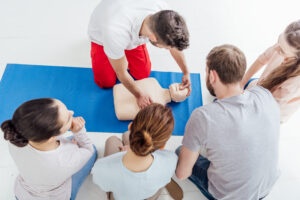
Head-tilt chin-lift opens the respiratory tract in a less competent person without trauma problems. If you think head or neck injury, utilize a jaw drive when trained, approving that air passage opening may be less effective. Mix caution with pragmatism. If you can not move air with a jaw thrust, default to head-tilt chin-lift and keep the spinal column neutral otherwise.
Mouth-to-mask beats mouth-to-mouth for safety and efficiency. A simple one-way shutoff resuscitation mask fits in a pocket or first aid kit. Develop a limited seal, give a breath over one second, just sufficient to see chest increase. 2 fast blasts that overfill the lungs push air into the belly, which enhances regurgitation risk and reduces air flow. If the upper body does not rise, rearrange and try again. If it still stops working, search for an obstruction and resume compressions quickly.
For skilled responders with bag-mask tools, 2 rescuers work best: one keeps a two-hand seal and air passage, the various other squeezes the bag. One rescuer landing a bearded, unresponsive patient on a damp pavement is a dish for air leakage and exhaustion. Know your limitations and utilize what you can regulate well.
What has actually altered in current years
Guidelines evolve gradually, but a number of shifts stand out from iterative updates and training emphasis.
- The concern on compressions continues to expand. Minimising stops briefly, staying clear of over-ventilation, and maintaining hands on the breast is the through-line. Numerous programs, including our cpr course modules, currently instructor rescuers to resume compressions instantly after a shock, without searching for a pulse. Opioid overdose combination sharpened. If you believe opioid involvement, administer naloxone as soon as it is offered, but do not postpone CPR to bring it from a remote kit. Air flow issues right here. You may see breathing return before a pulse, or the other way around, and duplicated dosing can be needed. Feedback gadgets obtained grip. Several first aid and cpr courses use manikins with real-time responses on deepness, price, and recoil. Studies show rescuers often tend to press also shallowly without responses. If your first aid training did not include this, look for a cpr refresher course that does. Hands-Only advice solidified for lay rescuers. Public messaging pushes compression-only CPR for inexperienced spectators of adult collapse. It decreases reluctance and raises onlooker activity. Trained rescuers still include breaths when appropriate. Pediatric subtleties expanded a lot more exact. For infants, use two fingers for solitary rescuer compressions and the enclosing two-thumb method for 2 rescuers. Deepness is about one third of the upper body's anterior-posterior diameter, approximately 4 cm in babies and 5 centimeters in kids. Air flows bring more weight in pediatric arrests.
The first min: practical choreography
Speed with order beats speed with disorder. When 2 or even more individuals are present, designate duties aloud. A single person checks responsiveness and breathing while the other calls emergency services and gets the AED. If you are alone with a phone, activate speaker setting so you can start compressions promptly while the call-taker dispatches aid. Strip the upper body quickly, move necklaces away, reduced bras if required, and place pads as quickly as they get here. If the surface is soft, like a bed or sofa, drag or log-roll the individual to the flooring. A firm surface area is not a nice-to-have. It is the difference between jumping the mattress and compressing the heart.
Safety, infection control, and practical risk
Hesitation frequently conceals behind fear of illness. Modern barrier devices and simple preventative measures make that threat very small. If no obstacle is available, and you are unwilling to supply breaths, do compression-only CPR. The larger danger is hold-up. Gloves and masks are typical in a first aid kit and should become part of any type of first aid course pack. If onlookers crowd in, assign somebody to develop area, open a door for paramedics, and direct traffic. A lot more hands assist just when they run a plan.

Electricity anxieties surface around AED usage. The tool will not surprise unless it finds a shockable rhythm. Keep hands off during evaluation and shock. Remove the individual from water if they are immersed. A moist floor is generally convenient with towel drying out under pad websites. Oxygen cyndrical tubes must be relocated at the very least a meter away from the upper body throughout defibrillation to reduce fire threat. Piercings do not require removal. Area pads close to them.
Special contexts that change priorities
Real cases rarely match a tidy layout. A strong first aid and cpr course hangs around on edges, not simply the center.
Drowning. Hypoxia drives the arrest. Begin with 2 rescue breaths, then deliver 30 to 2 cycles with emphasis on efficient air flow. If alone, perform regarding two mins of treatment prior to entrusting to get help, specifically with kids. Eliminate the individual from the water if safe, but begin ventilations as soon as the face is above water if a firm surface area is close. Avoid excessive abdominal thrusts or efforts to drain water, which postpone efficient CPR.
Trauma. Large hemorrhage kills faster than cardiac arrest. If you witness distressing collapse with extreme blood loss, control that bleeding first utilizing straight stress, a tourniquet, or a hemostatic clothing, then begin compressions when serious hemorrhage is managed. If the individual has a thought spinal injury, maintain spine placement as best you can without compromising compressions.
Pregnancy. The gravid womb from regarding 20 weeks can press the inferior vena cava, lowering blood return. Manually displace the uterus to the mother's left while doing CPR, or tilt the board concerning 15 to 30 degrees. Pad positioning adheres to the exact same standard sites, however you may require to change for breast tissue. If an AED encourages a shock, provide it. If the client remains pulseless and sophisticated help is delayed, medical facility teams may think about perimortem cesarean to enhance mother's end results, yet that is outside first aid extent. Your task is compressions, air passage, and rapid transport.
Opioids. Pinpoint students, slow-moving or absent breathing, and drug paraphernalia indicate overdose. Deliver naloxone early if readily available, preferably intranasal spray for simpleness. Continue air flows and compressions as needed. People might awaken agitated as naloxone turns around sedation. Protect on your own and the respiratory tract. Naloxone wears off faster than some opioids, so regression can occur.
Hypothermia. A cold heart is cranky. Take care of gently. Extended resuscitation might be worthwhile since metabolic rate slows, and people have actually survived with long downtime in chilly water. Get rid of wet clothes and insulate. AEDs still lead shocks, though defibrillation might be less efficient till rewarming.
Children and infants. The majority of pediatric apprehensions start with breathing troubles, not arrhythmias. Air flows matter. For single rescuers, make use of 30 to 2. With 2 rescuers, use 15 to 2. Compressions are one third breast deepness. Prevent leaning on the upper body between compressions, which prevails with little patients.
When to stop and exactly how to cope if you can not conserve them
Stopping CPR is a judgment telephone call ideal made with clinical instructions. As a lay rescuer or first aider, continue until the individual reveals indicators of life, a qualified professional takes control of, an AED guides you or else, or you are physically overcome. Many not successful resuscitations finish not because you did something wrong, yet due to the fact that the underlying reason bewildered the home window of spectator action. It is typical to really feel uncertain even when you did whatever right.
I advise every course: success is not only a heartbeat. It is acquiring time for a family to say goodbye, guiding a youngster out of panic, or giving paramedics a fighting begin. Debrief with your group. Usage workplace support programs. Then set up a cpr correspondence course while the memory is fresh. Practice turns stress right into steps.
Building a CPR-ready workplace and home
Formal first aid training is the backbone, however functional planning smooths the sides. AED placement must be noticeable, centrally located, and unlocked. Batteries and pads run out, typically every 2 to four years, so appoint somebody to inspect regular monthly. Keep an obstacle mask and gloves in each first aid kit, and store one with the AED. In multi-story structures, you might require greater than one AED to keep retrieval under three mins round trip. Map paths and check them like a fire drill.
Train broadly. A first aid and cpr course for a handful of safety wardens is great. Educating half the staff is much better. Genuine events take place in cafeterias, loading docks, satisfying spaces, and parking lot. Rotate participants via roles in drills: customer, compressor, respiratory tract, AED driver, and crowd supervisor. Reward fast hands, not just appropriate responses on a quiz.
At home, the odds state you will certainly utilize your skills on family. Keep a first aid package and a simple AED if cost enables. Know where it sits and who can reach it. Instruct teenagers exactly how to position pads and remain on the phone with emergency solutions. Method compressions on a company pillow while pacing a metronome at 110 beats per min. It seems foolish up until the night it is not.
Common blunders I see, and exactly how to fix them
- Shallow compressions. Almost every first-timer takes too lightly the force required. The grown-up upper body is resistant. Go for the target depth, count out loud, and check your rhythm with a timer or a song. Switch over rescuers every two minutes to combat fatigue. Over-ventilation. Big, fast breaths cause gastric inflation, regurgitation, and poor oxygen exchange. One second per breath, noticeable breast surge, that is it. If stomach distends, reduce quantity and guarantee the airway is open. Excessive pulse checks. Do not quest for a best pulse under anxiety. If the person is less competent and not breathing generally, start compressions. When an AED is on, follow its lead and maintain hands moving. Pad placement mistakes. As well near to each other, in addition to a medicine spot, or high up on the shoulder minimizes shock efficiency. Subject, dry, and place deliberately: top right upper body, lower left side under the armpit. Delayed AED implementation. People fear doing it incorrect. The tool talk with you. Get it switched on early, even while compressions proceed, and assign somebody to follow the prompts.
Certifications, refreshers, and picking the ideal course
A first aid certificate signals that you trained to a standard, but abilities decay is real. If you do not practice, your method slides within months. The majority of work environments smartly call for a cpr refresher course every one year and complete first aid training revival every a couple of years, depending on neighborhood guideline. Choose a service provider that:
- Uses comments manikins for compression deepness and recoil information, not just eyeballing. Teaches AED use with realistic scenarios, including damp surface areas, hair, and medicine patches. Spends time on special contexts like opioids, sinking, pediatric medicines, and trauma. Builds team choreography, not only solo rescuer skills. Offers mixed options where concept happens online and useful time is increased in person.
First Help Pro runs first aid courses and cpr training with an emphasis on realistic look. You will stoop on a difficult flooring, take care of a tangle of cords, and give breaths through a barrier device while your instructor pushes your elbow joints into the best pose. That friction instructs more than a best classroom ever could.
Technology and devices that aid, not distract
Metronome apps keep your price sincere. Smartwatches with haptic metronomes can guide compressions if you clip them to Ringwood first aid a t shirt or glove. AEDs with CPR responses coach your deepness cpr Hervey Bay and recoil. None of these replaces hands that start very early and do not stop. If a tool distracts you or includes hold-up, established it aside. A basic timer and a constant counter can be more valuable than a flashy screen.
In remote setups, some groups utilize mechanical compression gadgets, however those sit outside first aid extent and introduce configuration delays that you can not pay for. Prioritise hand-operated CPR and fast defibrillation.
When CPR intersects with lawful and ethical concerns
Good Samaritan securities in numerous areas protect ordinary rescuers that act in great belief and within their training. Obtain approval when the person is responsive. If they are less competent, consent is implied. Stop only if they gain back responsiveness and reject treatment, you become too tired to continue, or the setting comes to be harmful. Record what you did if it is a work environment incident: time discovered, actions taken, AED shocks delivered, and handover information. That document assists medical professionals and safeguards your team.
Family participants might plead for or against proceeding. Support to your training and the guidance of the call-taker on the line. Clear communication reduces conflict. Use ordinary language: "I am mosting likely to keep compressions going until the paramedics take control of."
A quick situation research study: the café floor
Two baristas watch a regular slump in his chair. One calls his name and shakes his shoulder. No feedback and a gasping, snoring breath that fades. The 2nd dials emergency situation services, places the phone on the counter on speaker, and competes the AED near the entryway. The very first rescuer decreases him to the flooring, clears the table, and starts compressions, passing over loud. Forty seconds later the AED gets on. Pads go on a wet chest after a quick towel rub. The device evaluations and suggests a shock. Everyone go back, community first aid classes near me the shock lands, and compressions resume instantly. They change every two minutes. On the second analysis, no shock advised. The 2nd rescuer provides 2 breaths with a pocket mask each cycle. After around six mins, the person coughs and attracts an uneven breath. They roll him to his side while monitoring, all set to resume if he quits breathing. Paramedics arrive, take a quick history, and carry the chain onward. That day, technique and format turned anxiety right into action.
Final ideas you can act upon today
Schedule a first aid and cpr course if your abilities are corroded. If you hold a first aid certificate older than two years, publication a cpr refresher course this month. Stroll to your workplace AED now and time the round trip. Put an obstacle mask in your bag. Teach one member of the family just how to call for aid and exactly how to position AED pads. When the minute comes, you will certainly not increase to the occasion. You will certainly fall back on your training. Make that training current.
CPR is not heroism. It is a practiced craft. The best rescuers I have actually fulfilled are not the loudest. They are the ones that begin early, pay attention to the AED, and keep their hands where they belong, on the facility of the upper body, relocating with purpose.